


One of the most common, but easily overlooked items of plastic in our homes is often hidden away under cabinets–the trash bag. These single-use plastics add up quickly, especially if you’re part of a large family household.
If you’re starting to look at switching to compostable trash bags, the options can quickly become overwhelming. There can be lots of claims and terminology when it comes to composting regulations and certifications, so we’re here to help you choose the best non-plastic, compostable trash bag for your kitchen, bathrooms, workshops, and more!
What Makes a Trash Bag Compostable?
Conventional plastic trash bags can take hundreds of years to degrade and often end up in a landfill, where compostable bags are designed to break down within a matter of months, in comparison.
So what makes a trash bag truly compostable?
- The garbage bag can break down into organic matter within a specified amount of time
- It breaks down into nutrient-rich compost that nourishes plants
- It leaves no toxic residue behind
What’s the Difference Between Compostable and Biodegradeable?
To understand the difference, one thing should make it easier to discern between compostable and biodegradable trash bags.
All compostable products are biodegradable, but not all biodegradable products are compostable.
There are strict regulations that vary by location whether something is certified and deemed compostable with their compost system.
Biodegradable is a more general term meaning that microorganisms like bacteria and fungi can break it down into smaller pieces over time. This can happen in soil, water, or other natural environments.
Biodegradable products can be made from plant-based, animal-based, or even synthetic materials. Another key point that differentiates them from compostable products is there’s no set timeline for when they break down.
For more on the difference between compostable vs. biodegradable products, check out this article.
What to Look for in the Best Compostable Trash Bags

The best compostable trash bags are simply the ones that you choose to use, because you’re making an active choice to reduce your single-plastic use! However, for convenience and utility, the best compostable garbage bags will be:
- Easy to use
- Strong enough to handle heavy household waste
- Provide a good value for money
Compostability Certifications
Composting certifications are especially important and highly regulated, due to compost often being used in the growing of edible plants. When comparing compostable trash bags, look for products that clearly identify their compostability certification, like the ZWS Compostable Trash Bags, that feature the following, for example:
- Certified Compostable by the Biodegradable Products Institute ASTM D6400
- Home Compost Certified by OK Compost
- Compost Manufacturing Alliance (CMA) - Composter approved
Some other USA composting certifications you might find, like on the BioBag compostable kitchen bags:
- BPI Certified: Meets ASTM D6400 standards for compostability in the USA and Canada
- CMA Approved: Field-tested and approved by the Compost Manufacturing Alliance for industrial use
- European (EN 13432) and Australian (AS4736) requirements.
- Non-GMO Project Verified: Made from plant-based materials without GMOs
Choose the Right Size
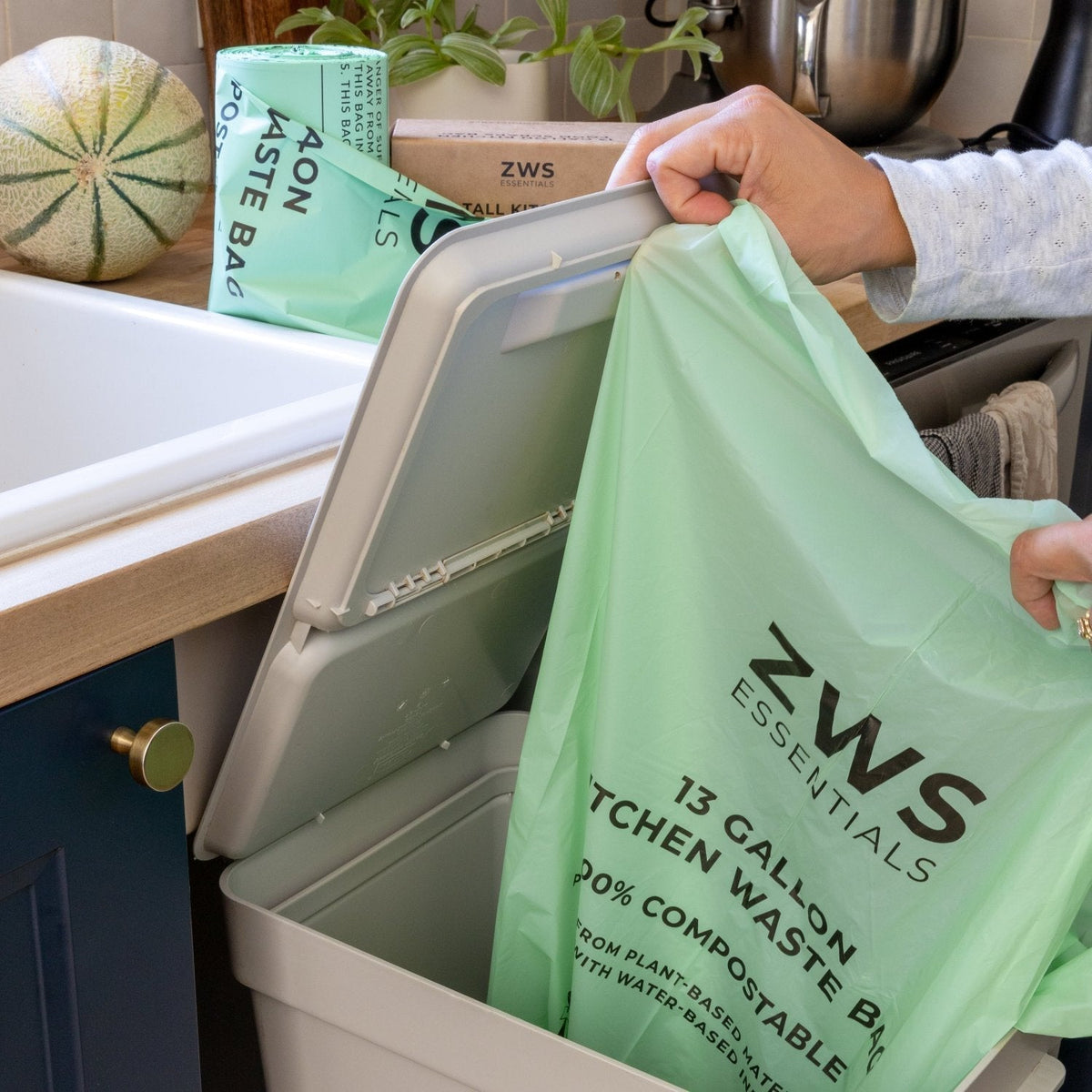
The most common kitchen sized trash bag is 13 gallon, with a variety of options available in this size at EarthHero. However, if you’re looking for a smaller size for pet waste or countertop composting, you can find those online as well.
Look at the Materials and Packaging
Most compostable and biodegradable trash bags are made from plant-based materials and fibers. When considering the materials used, you might also be interested in knowing if they’re made from GMO and BPO free materials, like the BioBags, which are made from Mater-Bi, an innovative family of bioplastics derived from the starches of plants, vegetable oils, and compostable polymers.
As you would expect, compostable trash bags should also be packaged in recyclable, plastic-free boxes.
Value for Money
Both BioBag and ZeroWasteStore 13-gallon compostable trash bags come in a pack of 48 for under $24! When you subscribe to receive a shipment on a regular basis from EarthHero, you’ll also receive a 20% discount, which can be especially useful for something like kitchen trash bags, which you’ll go through on a regular basis.
Where Can You Use Compostable Bags Around Your Home?
Trash bags are useful around more than just the kitchen.
For General Household and Kitchen Trash
While you’ll always want to keep a supply ready for kitchen use, they are also helpful for doing yardwork, cleaning up after parties and events, and using in other spaces like offices, bedrooms, and bathrooms.
For Food Scraps and Compostable Items
While you’ll always want to keep a supply ready for kitchen use, they are also helpful for doing yardwork, cleaning up after parties and events, and using in other spaces like offices, bedrooms, and bathrooms.
For Pet Waste

If you’ve got a furry friend who you enjoy long walks with, you’ll want some compostable pet waste bags to bring along with you. They’re small, compact, and made with the same plastic-free, plant-based materials as the traditional kitchen sized compostable bags from ZeroWasteStore.
Check Your Local Composting Guidelines
Backyard, commercial, and industrial composting all have their own benefits, but also have their own restrictions and uses. When composting and disposing of any type of compost or trash, it’s important to look up your local municipal composting and waste guidelines.
It’ll be helpful to provide them with the information about the bags you want to use, like what they’re made of, and what kinds of certifications they have.
Frequently Asked Questions About Compostable Trash Bags
If you’re looking for specific composting trash bag questions, look here:
Are compostable garbage bags really compostable?
Yes! However, products are declared compostable by the manufacturer, and may not be third-party certified. Contact your local waste-hauler or composting facility to determine where these materials may be accepted in your local area.
What is the difference between compostable and biodegradable trash bags?
Compostable trash bags are designed to break down into natural materials under specific composting conditions, while biodegradable trash bags simply means the material can be broken down by microorganisms over time. Not all biodegradable bags are compostable, so if you’re specifically looking for a bag that can break down through composting, look for a certified compostable product and check its disposal requirements.
Can compostable trash bags go in a backyard compost bin?
The compostable products mentioned contain material that can break down into soil in either a backyard or industrial composting system. However, some materials may be better suited for an industrial composting system.
Can compostable trash bags go in commercial composting?
Facilities vary, so contact your local waste-hauler or composting facility to determine where these materials may be accepted.
Can compostable trash bags go in the recycling bin?
Compostable trash bags are not intended for recycling, as many recycling programs request that materials be loose. If you’re looking for a recycling bag, check out recycling specific bags, like these ones that are compatible with municipal Clear Bag recycling programs where applicable.